Field guide
Shale gas and water: wells, wastewater and what is still debated
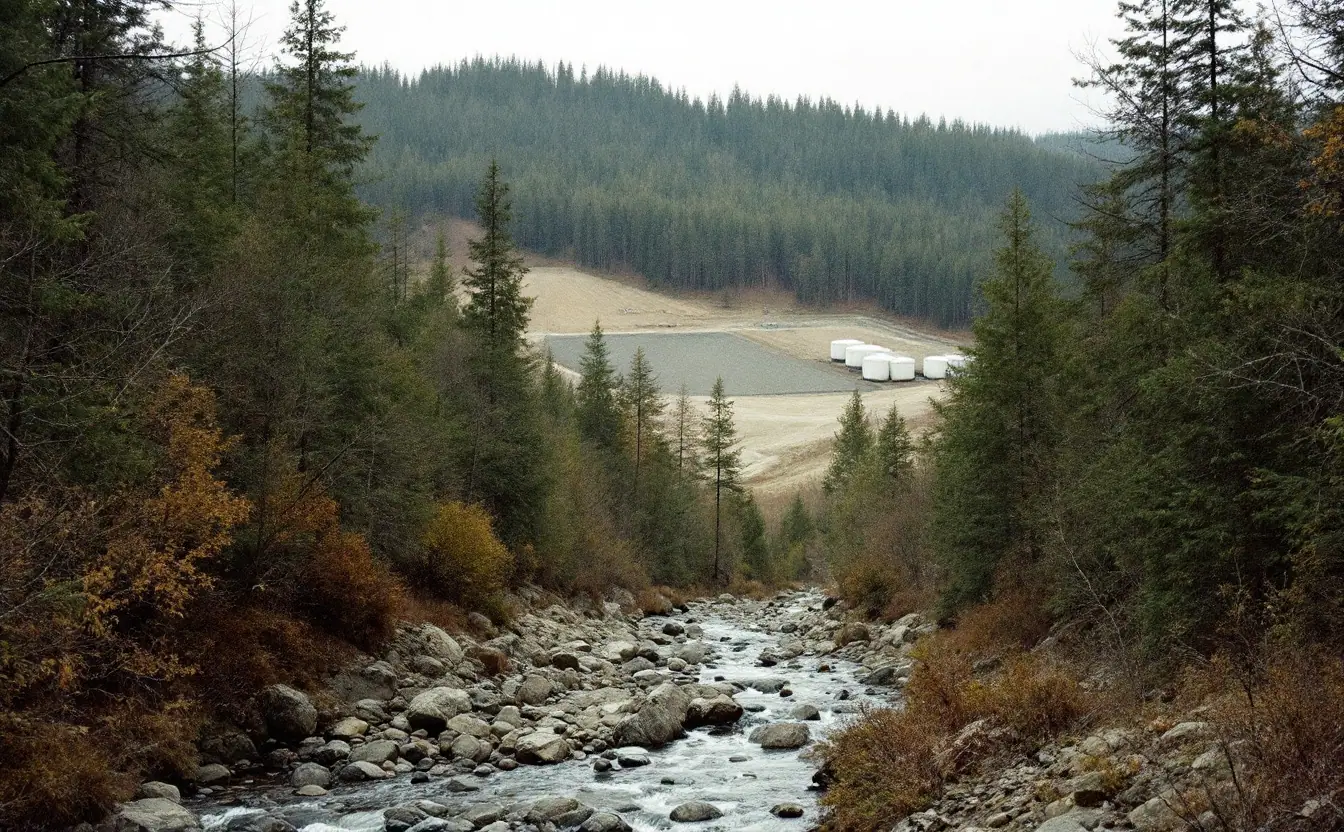
Across parts of Pennsylvania, Ohio and West Virginia, flat gravel pads have been cut into ridgetops that were hayfield or forest not long ago. Similar pads dot the pine woods of East Texas and northwest Louisiana and the hills of north-central Arkansas. Underneath, steel pipe turns sideways and runs through shale for long distances. Neighbors tend to ask the same questions: how much water does this take, what comes back up, and could any of it reach my creek or my well?
The honest answers mix well-understood engineering, documented problems and open questions. This guide sticks to what is broadly agreed on and says plainly where the debate lies.
How a shale well is built
Shale is fine-grained rock that holds gas in tiny pores but lets it move very slowly. Two techniques, used together, made it practical to produce at scale.
First, the well is drilled straight down, typically thousands of feet, through the shallow layers that hold fresh groundwater. Crews set steel casing and cement it in place in several nested strings, with the surface casing reaching below the deepest freshwater zone. Near the target shale the bore curves and runs horizontally, often for a mile or more. Several wells can share one pad.
Second comes hydraulic fracturing, usually shortened to fracking. The horizontal section is perforated and treated in stages. Each stage pumps water mixed with sand and a small share of chemical additives into the rock at high pressure, opening fractures; the sand props them open so gas can flow. Typical additives include friction reducers, biocides and scale inhibitors. Many states require disclosure, often through FracFocus, a public registry run by two organizations of state regulators, though some ingredients can be withheld as trade secrets.
How much water, and from where
Fracturing a modern horizontal well commonly takes millions of gallons of water. The amount varies widely by basin and well design, and it has generally grown as horizontal sections have lengthened. Operators draw it from rivers, lakes, groundwater, municipal suppliers or recycled wastewater from earlier wells.
Whether that matters depends on scale and timing. Against a whole state's water use, drilling is usually a modest slice next to power plants, irrigation and cities. Locally it can be different. A large withdrawal from a small headwater stream during a late-summer low flow can stress fish and insects, and in drier regions such as parts of Texas, water for drilling competes with farms and towns for the same aquifers. Some river basins, the Susquehanna among them, have interstate commissions that review large withdrawals.
What comes back up
After fracturing, part of the injected fluid flows back to the surface over the first days and weeks. This flowback gradually gives way to produced water, which rises with the gas for the life of the well and is mostly ancient brine from the formation itself.
Produced water from shale is often extremely salty; brines from the Marcellus can be several times saltier than seawater. Depending on the formation, it may carry bromide, barium, strontium, iron and manganese, along with naturally occurring radioactive elements such as radium, traces of hydrocarbons and leftover additives. How much fluid returns, and how salty it is, varies a great deal from one shale play to the next.
Where the wastewater goes
Handling that water is one of the central environmental questions in shale development. The main routes each carry trade-offs:
| Option | How it works | Trade-offs |
|---|---|---|
| Reuse in new wells | Produced water is filtered or blended and used to fracture the next well | Cuts freshwater use and disposal; still needs trucking, piping and storage, with spill risk |
| Underground injection | Pumped into deep disposal wells regulated under the Safe Drinking Water Act | Keeps brine out of streams; some disposal wells have been linked to earthquakes, and suitable geology is uneven |
| Centralized treatment | Specialized plants remove solids, oil and some salts before reuse or discharge | Removing dissolved salts and radium takes a lot of energy and leaves concentrated residues |
| Evaporation | Water evaporates from lined ponds | Practical only in arid climates; liners can leak, and ponds attract birds |
| Road spreading | Brine is spread on unpaved roads for dust control or de-icing where state rules allow | Low cost; salts, metals and radium can wash into ditches and streams, and the practice is contested |
History shaped these choices. In the early years of the Marcellus boom, some shale wastewater went to municipal sewage plants that could not remove dissolved salts. Rising bromide in rivers worried downstream water utilities, since bromide feeds the formation of disinfection by-products. The U.S. EPA later issued pretreatment standards that bar sending wastewater from shale and similar unconventional wells to municipal plants.
What can go wrong for streams
Most documented problems at the surface are not exotic. They are the familiar risks of heavy industry in rural country:
- Spills from trucks, tanks, hoses and pipelines carrying fracturing fluid, chemicals or brine.
- Leaks from storage pits or failed liners.
- Erosion and sediment from pads, roads and pipeline corridors on steep slopes, especially during construction; the controls match those in our guide to erosion and sediment control.
- Withdrawals that draw small streams down at the wrong time of year.
- Fragmentation of forests and stream corridors by roads and rights-of-way.
Industry supporters say these risks are managed with engineering standards, inspections and spill plans, and that practices have tightened over time. Critics point to spill records, uneven enforcement and the cumulative effect of dense networks of pads and pipelines. Both observations can hold at once.
What can go wrong for private wells
Groundwater questions draw the most heat, and careful wording matters most here.
The most widely recognized pathway is well integrity. If casing or cement fails, gas or fluids can move up along the outside of the well into shallow aquifers, and stray methane in water wells has been traced to faulty gas well construction in some documented cases. Surface spills soaking into the ground are another route, as are old, poorly plugged wells acting as conduits.
Whether fractures themselves can reach drinking water is more contested. In deep shale plays, thousands of feet of rock usually separate the fractured zone from aquifers, and many researchers consider a direct fracture connection unlikely there. Where fracturing happens at shallower depths, the separation shrinks and the risk is harder to rule out.
Methane complicates everything, because it occurs naturally in groundwater across parts of the Appalachian Basin and other gas regions, long before any drilling. Chemists can sometimes tell sources apart using the mix of methane, ethane and propane and the isotopic signature of the gas, and earlier data to compare against makes the job far easier.
The U.S. EPA's 2016 assessment of hydraulic fracturing and drinking water concluded that activities across the fracturing water cycle can affect drinking water resources under some circumstances. It named conditions that make impacts more likely, including withdrawals where water is scarce, spills, wells with inadequate mechanical integrity, discharge of inadequately treated wastewater and storage in unlined pits. It also said data gaps kept it from estimating how often impacts occur nationally, and those gaps are a large part of why the argument continues.
Other points still argued over
- How often contamination actually happens, versus how often it is alleged or never investigated.
- How cement and casing hold up over decades, and who looks after wells once production ends.
- Health effects for people living close to pads, where studies have reached mixed conclusions and are hard to design well.
- How to weigh local water and land impacts against wider effects: jobs and royalties, natural gas burning cleaner than coal at the smokestack, and concern about methane leaks and climate.
Baseline testing for homeowners
If drilling is planned near you, the single most useful step is often a baseline test of your well before work begins. Without one, nobody can say with confidence whether a later change came from drilling, natural variation or something else. Extension services in shale regions publish detailed guides; in general they suggest:
- Test before site preparation starts, and keep the original report
- Use a lab certified for each test you order and ask for chain-of-custody records; our guide to how environmental labs check their work explains why
- Include dissolved methane, ideally with ethane and propane
- Include brine indicators: chloride, bromide, sodium, and total dissolved solids or specific conductance
- Include barium, strontium, iron, manganese and sulfate
- Add pH, hardness, total coliform bacteria and arsenic for the water's general condition
- Ask about radium or gross alpha if local geology warrants it
- Note the water's look, smell and taste and your well's depth; keep photos and reports in one folder
- Retest during and after drilling, and whenever the water changes suddenly
In some states operators sample nearby water wells before drilling, by rule or by choice. Ask for a copy; your own independent test is still worth having. State oil and gas regulators usually publish records of drilled wells, and our guide to public maps and data tools covers wider water data.
Questions readers ask
Does fracking cause earthquakes? Fracturing itself occasionally triggers small tremors. Larger felt earthquakes in places such as Oklahoma and eastern Ohio have been linked mainly to deep injection of wastewater, and regulators there have adjusted injection rules.
If there is methane in my water, did a gas well put it there? Not necessarily. Methane occurs naturally in groundwater in many areas. Baseline results, gas composition and isotope analysis help sort out the source.
Is produced water radioactive? It can contain naturally occurring radium from the rock, at levels that vary by formation, which is one reason its handling and disposal are regulated.
What should I do if my well water suddenly changes? Stop drinking it if it looks, smells or tastes wrong, get it tested by a certified lab, and contact your local health department and your state's oil and gas or environmental regulator.